

David Curran, Partner and Head of Commercial Litigation
Jade Liddy, Trainee Solicitor
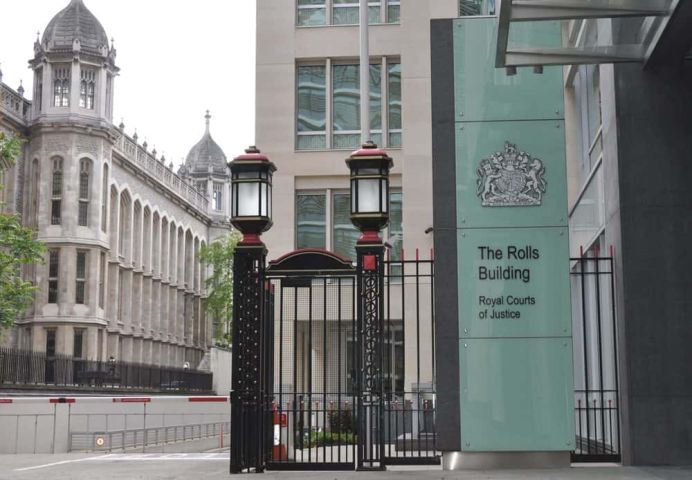
A significant judgment concerning Directors and Officers (“D&O”) insurance policies was delivered by the Commercial Court of England and Wales (the “Court”) in the recent case of Liberty Managing Agency Ltd & Ors v Chedid & Anor[1]. Although the Court’s decision is non-binding in the Republic of Ireland, it is highly persuasive and provides much-needed clarity on the application and interpretation of insuring clauses within D&O policies.
Key takeaways
Insurers cannot avoid policies based on mere allegations of fraudulent misrepresentation, unless there is:
- clear contractual language permitting such avoidance; and/or
- a final judicial determination / formal admission of such fraud.
Additionally, if insurers wish to avoid policies based on public policy, they must ensure that there is provision for avoidance on such grounds in the wording of the contractual agreement entered into with the insured.
What was the background to this case?
The Claimants (the “Insurers”) in this case provided a Directors & Officers (“D&O”) insurance policy (the “Policy”) to Petrofac Limited and others (the “Insured”). This policy was the second excess layer in Petrofac Limited’s programme and provided cover of £45 million in excess of £30 million.
Mr Marwan Chedid and Mr George Salibi (the “Defendants”) were officers of Petrofac Limited and were, therefore, insured under Petrofac Limited’s D&O insurance policy. As of the date of the Court's judgment, the Defendants were facing criminal charges in relation to alleged bribery offences, to which they pleaded not guilty.
The Defendants defence costs in relation to the criminal charges were discharged by the Insurers under a primary policy, with a £15 million limit of indemnity, and a first excess policy, with a further limit of £15 million. Both indemnity limits were close to exhaustion.
In August 2026, the Insurers wrote letters of avoidance to the Insured seeking to avoid the second excess policy as against the Defendants. The Insurers did so on the basis of alleged fraudulent misrepresentation and fraudulent non-disclosure. When the judgment was handed down, these allegations had not been proven.
The Defendants argued that the Policy required the Insurers to continue to provide them with their defence costs. The Defendants maintained that they were unable to fund their own defence costs and that the purported avoidance of the Policy interfered with their ability to defend themselves at trial.
What were the issues in this case?
The central contractual provision of the Policy was clause 8.2. This provided that the Insurer could not avoid the policy in respect of certain fraudulent conduct unless that conduct “is established by a final decision of a court, tribunal or regulator or by a formal written admission of the Insured”[2].
An expeditated hearing was held on 9 September 2026. The Court was to determine three preliminary issues:
- Whether the Insurers were entitled to avoid the Policy under clause 8.2, or as a matter of public policy, before the alleged fraudulent conduct had been established by a final decision of a court, tribunal or regulator, or by a formal written admission.
- Whether public policy prevented the Defendants from obtaining insurance cover for the costs of defending criminal proceedings involving allegations of bribery and fraud.
- Considering the determination of issues 1 and 2, whether the Insurers were obliged to continue advancing the Defendants’ defence costs while the criminal allegations remained unresolved.
What did the Commercial Court decide?
A judgment was handed down on 11 September 2026. Mr Justice Jacobs favoured the Defendants in relation to all three issues. It was held that insurers cannot prematurely avoid a policy or withhold defence costs based on allegations of fraudulent misrepresentation without a final judicial determination or clear contractual language permitting it to do so.
The Insurers were ordered to continue to advance the Defendant’s defence costs. It was also determined that if the underwriters wanted to have an exclusion to the provision of public policy grounds that this should have been included in the wording. The wording of the policy, as written, envisaged coverage under the policy as per the wording of clause 8.2 as cover would only be terminated by a final judicial decision or formal admission.
What is the significance of this case?
The decision demonstrates the importance of the precise wording of D&O insurance policies, particularly non-avoidance clauses and conduct exclusions. The judgment confirms that where a policy expressly requires fraudulent conduct to be “established by a final decision or admission” before avoidance can occur, an insurer will be required to maintain cover until that condition is satisfied.
It also distinguishes between insurance against the consequences of proven wrongdoing and insurance covering the costs of defending allegations which have not yet been established. The Court granted the Insurers permission to appeal the decision.
Dislaimer of Liability: This insight article is provided for general information purposes only and should not be relied upon as legal advice. Readers should seek specific legal advice tailored to their individual circumstances before taking or refraining from any action. Holmes O'Malley Sexton LLP, its partners, employees, agents, and affiliated entities disclaim all liability, to the fullest extent permitted by law, for any loss or damage arising directly or indirectly from reliance on the information contained in this publication.
Related News & Insights

15 October 2026
3 Minmin Read
Insights
CJEU Confirms Dublin Airport Passenger C...

Cathal Minihane
Partner

08 October 2026
1min Read
Insights
Local Property Tax Clearance: What Vendo...

Nicole Bateman
Solicitor
05 October 2026
4min Read
Insights
What Legal Costs Can Insurers Really Rec...

Marguerite Seymour
Senior Associate Solicitor